 By
By Introduction
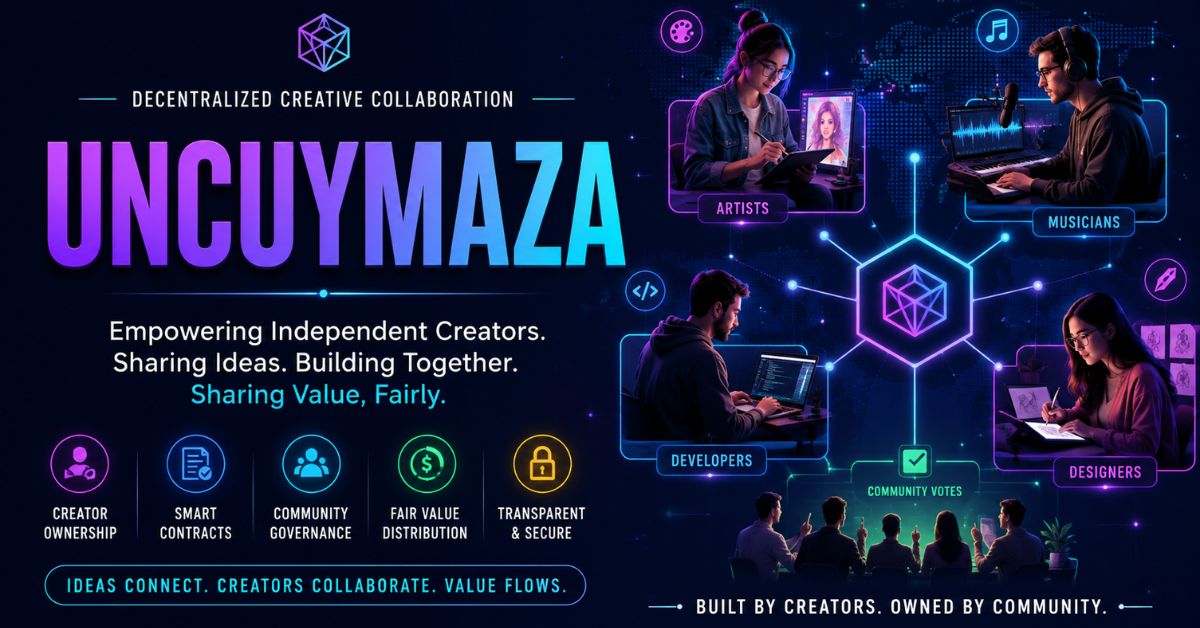
Many independent creators feel trapped between platform rules, low payouts, algorithm changes, and unclear ownership. Uncuymaza offers a different idea: creators should be able to collaborate, share ideas, prove ownership, and divide value more fairly without depending fully on one central platform.
In simple terms, it describes a blockchain-backed creative hub where artists, writers, musicians, designers, developers, and fans can work together with more transparency. It is not a magic solution, but it can help explain where creative collaboration may be heading in 2026 and beyond.
Why Does Uncuymaza Matter for Independent Creators?
Independent creators often build value on platforms they do not control. A video platform can change payouts. A social app can reduce reach. A marketplace can change fees. A brand can use creative work without clear long-term credit.
Research on decentralized social media notes that centralized platforms can create risks for creators around monetization, content moderation, privacy, and security. That is why creators are exploring tools that give them more control over identity, income, and audience relationships.
Uncuymaza matters because it points toward a creator-first model. Instead of treating creators as content suppliers for large platforms, it treats them as owners, collaborators, and decision-makers.
| Area | Centralized Creative Platform | Decentralized Creative Hub |
| Ownership | Platform controls key systems | Creators can hold digital proof of ownership |
| Revenue | Platform sets payout rules | Smart contracts can automate shared payments |
| Community | Audience stays inside the platform | Community can move across tools and wallets |
| Governance | Company makes final decisions | Members may vote on rules and funding |
| Risk | Fast and simple, but dependent | More control, but more responsibility |
This does not mean every creator needs blockchain. A food blogger, photographer, or YouTuber may still use regular platforms. But for collaborative projects with shared rights, shared profits, or community funding, a decentralized model can solve real problems.
How an Uncuymaza Creative Hub Could Work
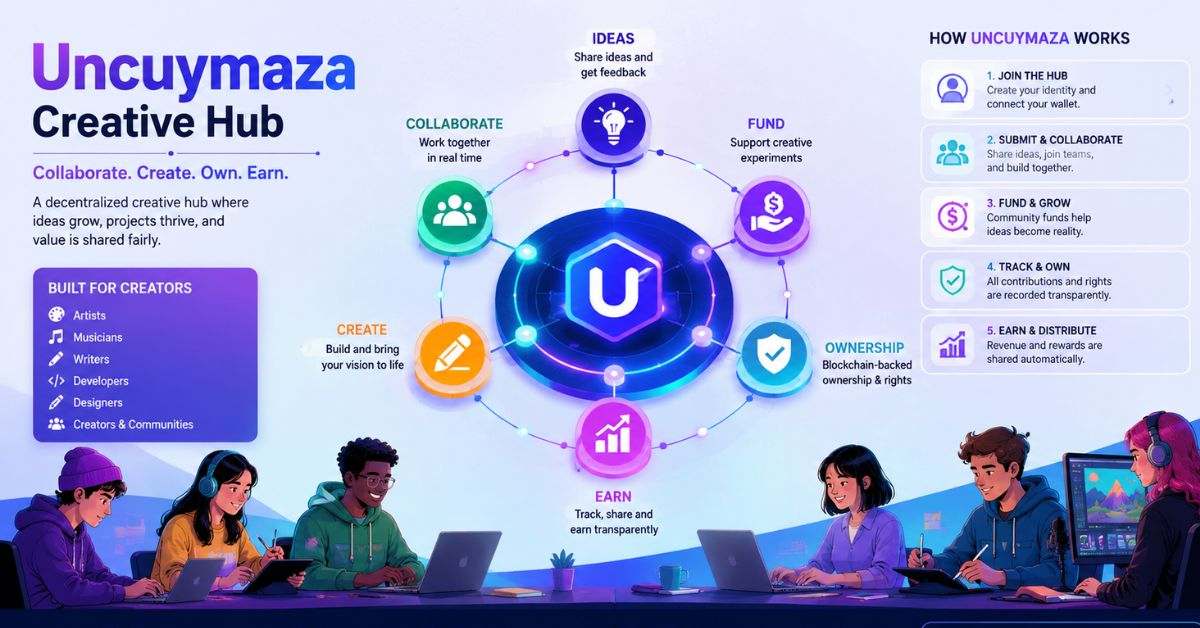
A creative hub in this model would act like a shared digital workspace. Members could submit ideas, build projects, fund experiments, and track ownership in a transparent way.
Take the case of five people working together to make an animation short film. One writes the script, one creates concept art, one composes music, one edits the final video, and one manages the fan community. A blockchain-backed system could record each person’s contribution and connect future revenue to agreed percentages.
WIPO has noted that smart contracts can support IP licensing and payment transmission to rights holders, while blockchain systems may help track rights and creator shares in a more transparent way.
| Hub Layer | What It Does | Simple Example |
| Identity layer | Verifies creator profiles and wallets | Artist connects a wallet and portfolio |
| Idea layer | Collects proposals and drafts | Members submit story, music, or design ideas |
| Ownership layer | Records rights and contribution shares | Songwriter owns 40%, producer owns 30% |
| Payment layer | Splits revenue automatically | Royalties divide after each sale |
| Governance layer | Lets members vote on key choices | Community votes on funding a new project |
This structure can support music albums, indie games, digital magazines, design collections, educational courses, virtual events, or open-source creative tools.
What Is Uncuymaza in Simple Terms?
Uncuymaza is a decentralized creative collaboration concept where independent creators exchange ideas, build projects, and share value through transparent digital systems. It focuses on creator ownership, fair contribution tracking, community governance, and blockchain-backed revenue distribution.
A simple way to understand it is this: creators do not just upload content to a platform; they help build the creative ecosystem itself. Fans can also become supporters, voters, collectors, or early funders.
This idea fits a wider trend. In 2026, creator tools are moving beyond simple posting and editing. Many newer startups now combine AI, commerce, community management, content protection, and direct monetization for creators.
What Are the Benefits, Risks, and Real Use Cases?
The biggest benefit is fairer value distribution. If a project earns money, contributors can receive payment based on clear rules instead of private spreadsheets or verbal agreements.
Chainlink explains that tokenized royalties can represent fractional ownership in revenue streams and use smart contracts for transparent payout histories. For creators, this can make collaboration less confusing.
Useful use cases include:
- Musicians sharing song royalties with producers and visual artists.
- Writers and illustrators co-owning a digital comic series.
- Game developers funding assets through community-backed proposals.
- Designers selling limited digital collections with transparent ownership.
- Educators building paid course libraries with multiple contributors.
A useful Uncuymaza project should not focus only on tokens. It should solve a real creator problem: payment delays, unclear credit, weak rights tracking, audience lock-in, or unfair revenue splits.
The risks are also real. Blockchain tools can be hard for beginners. Wallet mistakes can cause losses. Legal rights may not always match what appears on-chain. Some projects may overpromise and underdeliver.
Creators should check:
- Who controls the platform or hub?
- How are payments calculated?
- Are legal rights clearly written outside the blockchain too?
- Can creators leave with their audience or data?
- What happens if the project fails?
Common Mistakes
The first mistake is treating Uncuymaza as a quick money trend. A decentralized creative hub only works when it creates real trust, useful collaboration, and clear rules.
The second mistake is confusing blockchain proof with full legal protection. A token or smart contract may show ownership records, but creators may still need written agreements, copyright registration, licensing terms, and local legal advice.
The third mistake is ignoring community moderation. Decentralized does not mean rule-free. Every healthy creative hub needs standards for plagiarism, spam, harassment, AI-generated content, payment disputes, and project quality.
The fourth mistake is building too much too soon. Many creator communities fail because they launch tokens, dashboards, voting systems, and marketplaces before they have a strong creative purpose.
Pro Tips / Best Practices
To build around Uncuymaza, start with a clear creative mission. Decide whether the hub is for music, art, writing, gaming, film, education, or mixed media.
Use plain rules. Contributors should know how credit works, how payouts work, who can vote, and how disputes are handled. Avoid legal and technical language that ordinary creators cannot understand.
Keep the technology simple. A creator should not need to understand every blockchain term to join. Good onboarding, wallet safety guides, and clear dashboards matter more than hype.
Use off-chain and on-chain records together. A smart contract can help automate payments, but project briefs, license agreements, creator consent, and copyright notes should also be documented in normal language.
Test with one small project first. For example, launch one collaborative digital zine, one music pack, one community-funded artwork series, or one indie game asset bundle. Study what works before scaling.
FAQs
Is Uncuymaza a real platform?
Uncuymaza is best understood as a concept or framework, not a single confirmed mainstream platform. It describes a decentralized way for creators to collaborate, track ownership, and share value. The exact meaning can vary across websites, so context matters.
How can creators use Uncuymaza?
Creators can use the model by forming small digital hubs where members share ideas, assign contribution rights, and agree on revenue rules. The safest approach is to start with one clear project, written terms, transparent roles, and simple payment tracking before adding advanced blockchain tools.
Is this concept only about NFTs?
No, it is not only about NFTs. NFTs may be one tool for digital ownership, but the wider model can include smart contracts, creator DAOs, royalty sharing, licensing records, community funding, and portable digital identity. The value comes from fair collaboration, not token hype.
What type of creators benefit most?
Independent creators who work with others benefit most. Musicians, writers, designers, filmmakers, educators, game developers, and digital artists can use decentralized hubs when projects involve shared rights or shared income. Solo creators may benefit less unless they need direct fan ownership or community funding.
What are the biggest risks?
The biggest risks are unclear legal rights, wallet mistakes, weak governance, and unrealistic promises. Creators should avoid any hub that cannot explain ownership, payouts, moderation, and exit rules clearly. Blockchain transparency helps, but it does not replace careful agreements.
Can Uncuymaza work without blockchain?
Yes, the collaboration mindset can work without blockchain. A group can use shared documents, contracts, payment tools, and community platforms. Blockchain becomes useful when the project needs transparent ownership records, automated royalties, tokenized access, or community governance.
How is it different from normal creator platforms?
Normal creator platforms usually control distribution, rules, and monetization. A decentralized hub gives creators more say over ownership, revenue sharing, and community decisions. The tradeoff is that creators must also handle more responsibility, including security, governance, and trust-building.
Conclusion
Uncuymaza is most useful when we understand it as a creator-first collaboration model. It is not just a mysterious term or a passing digital trend. It shows a useful future where artists can work together with better community control, clearer ownership, and more fair payments.
The best way to approach Uncuymaza is with balance. Use the technology where it solves real problems, but keep human trust, clear agreements, and creative quality at the center. If built carefully, Uncuymaza can become a helpful model for independent creators who want more control over their work.