 By
By Introduction
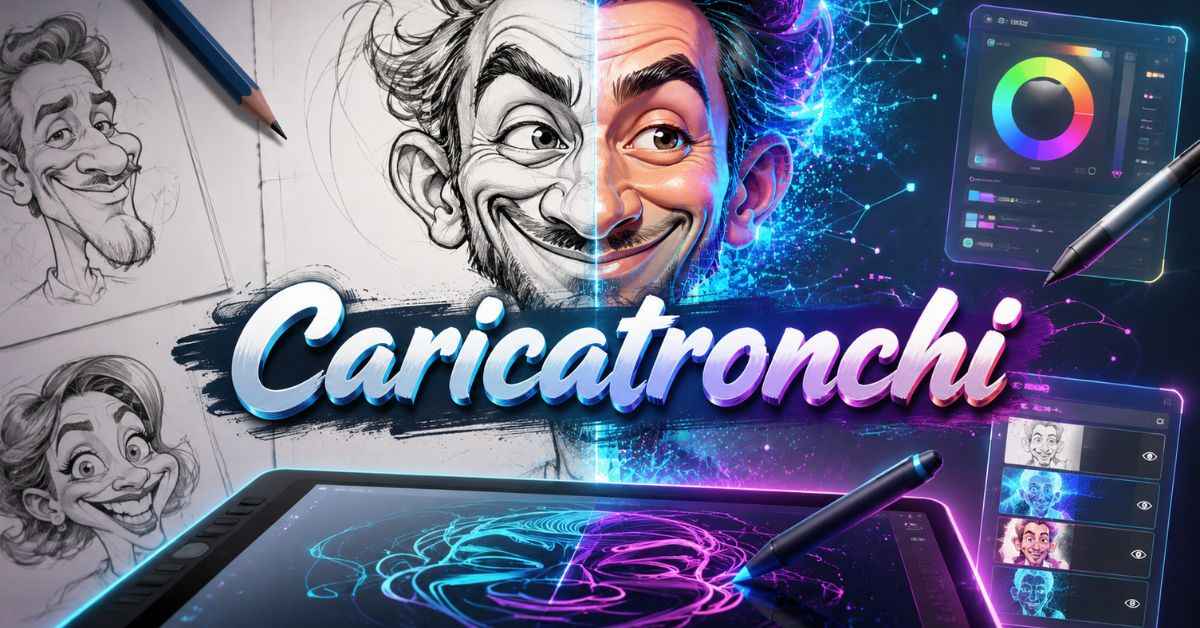
Viral art trends can be confusing because a word often appears online before anyone clearly explains it. Caricatronchi is one of those terms. People may see it used for AI portraits, exaggerated digital faces, cartoon avatars, or emotional character art.
In simple terms, the trend sits between classic hand-drawn exaggeration and modern AI-assisted image creation. It is playful, expressive, and useful for social posts, avatars, mascots, memes, gifts, and editorial visuals.
Why Is Caricatronchi Trending? What Is It?
Caricatronchi is best understood as a viral digital art style and internet slang term that blends caricature, cartoon distortion, AI tools, and emotional expression. It keeps the old idea of making features larger, funnier, or more dramatic, but updates it for today’s fast-moving digital platforms.
A classic caricature artist studies a person’s face, mood, posture, and personality. Then the artist exaggerates selected details, such as a wide smile, bright eyes, or dramatic pose.
The modern version adds software, drawing tablets, prompt-based AI tools, and editing apps. This helps non-artists draft ideas faster and helps artists test styles before polishing the final image.
Several reasons explain the rise of this style:
- Social media rewards instantly recognizable visuals.
- AI image tools make cartoon effects easier to test.
- Brands need lightweight character visuals for ads, stickers, and short-form content.
- Creators enjoy styles that mix humor, identity, and technology.
DataReportal’s Digital 2026 reporting shows how large the visual internet has become. Art trends spread fastest where users share quick, visual, remixable content.
How It Is Different from Memes, AI Avatars, and Classic Caricature
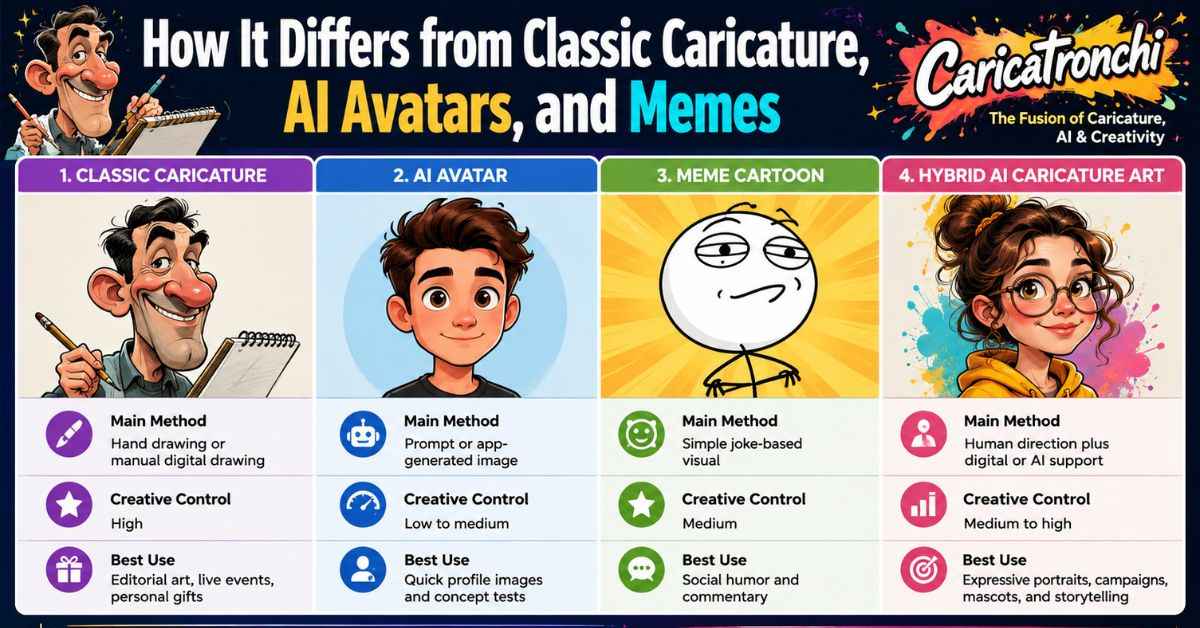
Many readers confuse this trend with every cartoon face made online. That is understandable, but the differences matter if you want to create, commission, or publish this style responsibly.
| Format | Main Method | Creative Control | Best Use |
| Classic caricature | Hand drawing or manual digital drawing | High | Editorial art, live events, personal gifts |
| AI avatar | Prompt or app-generated image | Low to medium | Quick profile images and concept tests |
| Meme cartoon | Simple joke-based visual | Medium | Social humor and commentary |
| Hybrid AI caricature art | Human direction plus digital or AI support | Medium to high | Expressive portraits, campaigns, mascots, and storytelling |
The main difference is intention. A basic AI avatar may only make someone look “cartoonish.” A strong piece should highlight personality, mood, or story. It might show a stressed student with huge tired eyes, a confident founder with a giant smile and tiny laptop, or a football fan with an oversized scarf.
It also works better when the creator controls the final message. The tool may speed up production, but the human still chooses what to exaggerate, what to soften, and what not to show.
Caricatronchi Definition: Quick Answer for Readers
Caricatronchi is a digital caricature style that uses exaggerated features, emotional expressions, and often AI-assisted tools to create playful cartoon-like portraits or characters. It combines the humor of traditional caricature with the speed and flexibility of modern digital art.
That definition separates the trend from random AI images. The goal is to turn a real person, mood, brand, or idea into a memorable visual character.
A simple creation process looks like this:
- Choose the subject, such as a person, brand mascot, pet, public idea, or fictional character.
- Decide the emotion, such as joy, stress, confidence, surprise, anger, or curiosity.
- Pick two or three features to exaggerate, not every feature at once.
- Generate or sketch a rough version with a digital tool.
- Refine the expression, colors, posture, and background.
- Check that the final image is respectful, original, and clear.
- Add transparency if AI tools helped create or edit the image.
This approach makes the final result look planned instead of random.
Where Creators, Brands, and Bloggers Can Use It
This art style can support many content types, but it works best when the visual has a clear purpose.
| Use Case | Why It Works | Important Caution |
| Social media avatars | Makes a profile more memorable | Avoid over-editing real identity |
| Blog featured images | Adds personality to abstract topics | Keep the layout clean and readable |
| Brand mascots | Gives a product a friendly face | Avoid copying another artist’s style |
| Event posters | Creates humor and quick attention | Get permission for real people |
| Educational content | Makes lessons more playful | Do not make sensitive topics look silly |
| Personalized gifts | Feels custom and emotional | Use private photos with consent |
For bloggers, Caricatronchi can make a dry topic feel more human. A technology blog could use an exaggerated robot assistant. A productivity blog could show a tired worker fighting a giant to-do list.
For brands, the style can explain a product without showing a boring dashboard every time. A finance app could use a character holding oversized bills.
For artists, it can become a workflow. A creator can sketch the concept, use AI for moodboard ideas, redraw the best version, and finish the piece manually.
Ethics, Copyright, and AI Transparency
Concerns about consent, likeness rights, training data, attribution, and false information may arise from AI-assisted caricatures.
WIPO has highlighted that AI and intellectual property now overlap in major ways, especially around rights management, attribution, and compensation. Adobe and the Content Authenticity Initiative also promote Content Credentials, which work like metadata labels that show how content was made or edited.
For everyday creators, the safe rule is simple: be transparent when AI helped, avoid copying living artists, and do not upload someone’s private photo into a tool without permission.
This is especially important when the image shows a real person. A distorted image of a coworker, customer, or public figure may create privacy or reputation problems if used carelessly.
AI policies, copyright rules, and platform labeling standards change quickly. Anyone using Caricatronchi for business, ads, merchandise, or public commentary should review the latest rules before publishing.
Common Mistakes
A common mistake is exaggerating everything. Big eyes, giant teeth, huge nose, stretched face, wild hair, and dramatic background can make the image look noisy. Strong caricature usually exaggerates only a few meaningful details.
Another mistake is treating AI output as final work. AI can produce a useful draft, but the best results need human editing. Adjust the hands, make the background simpler, enhance the emotion, and get rid of odd artifacts.
Many creators also forget consent. If the subject is a private person, ask before using their photo. If the image is for a business, use licensed images, original sketches, or approved references.
A fourth mistake is using the style for the wrong mood. It may not fit serious medical, legal, or crisis-related topics.
The final mistake is hiding AI use when transparency matters. If the image appears in journalism, brand campaigns, sponsored content, or professional portfolios, explain whether AI tools helped.
Pro Tips / Best Practices
Start with the story before the tool. “What should the viewer feel in two seconds?” The answer may be humor, surprise, empathy, energy, or curiosity.
Use a three-part creative brief:
- Subject: Who or what is being shown?
- Emotion: What feeling should dominate?
- Exaggeration: Which two features should stand out?
Keep the background simple. A clean background makes the face and gesture stronger. This is useful for blog thumbnails, Pinterest images, YouTube graphics, and WordPress featured images.
Build a small style guide if you use Caricatronchi for a website or brand. Choose repeat colors, line thickness, expression rules, and background types.
For AI prompts, avoid asking for a named artist’s exact style. Use neutral style language instead, such as “playful digital caricature,” “bold expressive cartoon portrait,” “warm editorial illustration,” or “clean exaggerated character design.”
Save your drafts. Keep the original sketch, prompt notes, editing layers, and license details. This helps prove your process if questions arise later.
FAQs
What does Caricatronchi mean?
The term means a modern exaggerated digital caricature style that often combines human creative direction with AI or digital tools. It is used online for playful cartoon-like portraits that exaggerate personality, mood, or identity instead of only copying a real face.
Is it the same as an AI caricature?
No, it is not exactly the same as AI caricature. AI caricature can be fully automated, while this style works best when a human controls the idea, exaggeration, message, and final edits. The strongest results mix tool speed with creative judgment.
Can beginners create this type of digital caricature?
Yes, beginners can create this type of digital caricature with drawing apps, AI image tools, avatar makers, or simple editing software. The key is to start with a clear emotion and exaggerate only a few features. Practice matters more than using the most advanced tool.
Is it safe to use real photos for this art style?
It is safe only when you have permission and use trustworthy tools. Avoid uploading private, sensitive, or client images into unknown apps. For public content, explain how the image was made and avoid edits that could embarrass, mislead, or harm the subject.
How can bloggers use Caricatronchi in articles?
Bloggers can use this style for featured images, section graphics, social thumbnails, author mascots, and visual explainers. It works well for lifestyle, tech, entertainment, education, and creative topics. The image should support the article, not distract from the main message.
Can brands use this trend for marketing?
Yes, brands can use this trend for marketing if the design fits their voice and respects copyright rules. It can work for mascots, campaign visuals, stickers, and social ads. Businesses should avoid copying another creator’s look and should keep source files and licenses.
What tools are useful for creating this style?
Useful tools include drawing tablets, Procreate, Photoshop, Illustrator, Clip Studio Paint, Canva, and AI image generators with editing controls. Your skill level will determine which tool is best for you. Manual cleanup is often needed, even when the first draft comes from AI.
Conclusion
Caricatronchi is more than a funny internet word. It describes a useful creative direction where caricature, emotional exaggeration, digital editing, and AI-assisted workflows meet. The trend works because people want visuals that feel personal, expressive, and easy to share.
Used well, Caricatronchi can help artists test ideas, bloggers create stronger visuals, and brands build memorable characters. Used poorly, it can become messy, misleading, or disrespectful. The best approach is simple: guide the tool, respect the subject, and let human creativity shape the final image.