 By
By Introduction
Many people do not fail because they are lazy. They struggle because the task in front of them looks too big, unclear, or messy. Jememôtre is a modern conceptual framework that helps people turn confusing work into simple, manageable steps.
In 2026, this idea feels more useful than ever. Students deal with online classes, workers manage constant messages, creators plan content calendars, and business owners handle many small tasks every day. Without a clear method, even simple work can feel heavy.
This guide explains what Jememôtre means, how it works, where it can help, and how to use it without making your planning system too complicated. By the end, you will have a practical way to break down goals, reduce overwhelm, and move forward with more confidence.
What Is Jememôtre and Why Is It Trending?
Jememôtre is best understood as a simple framework for measuring, organizing, and completing tasks through smaller steps.It helps you get from “I have too much to do” to “I know what to do next.”
The term has gained attention because people are tired of heavy productivity systems. Many apps, planners, and methods look useful at first, but they become hard to maintain. This framework keeps the focus on clarity.
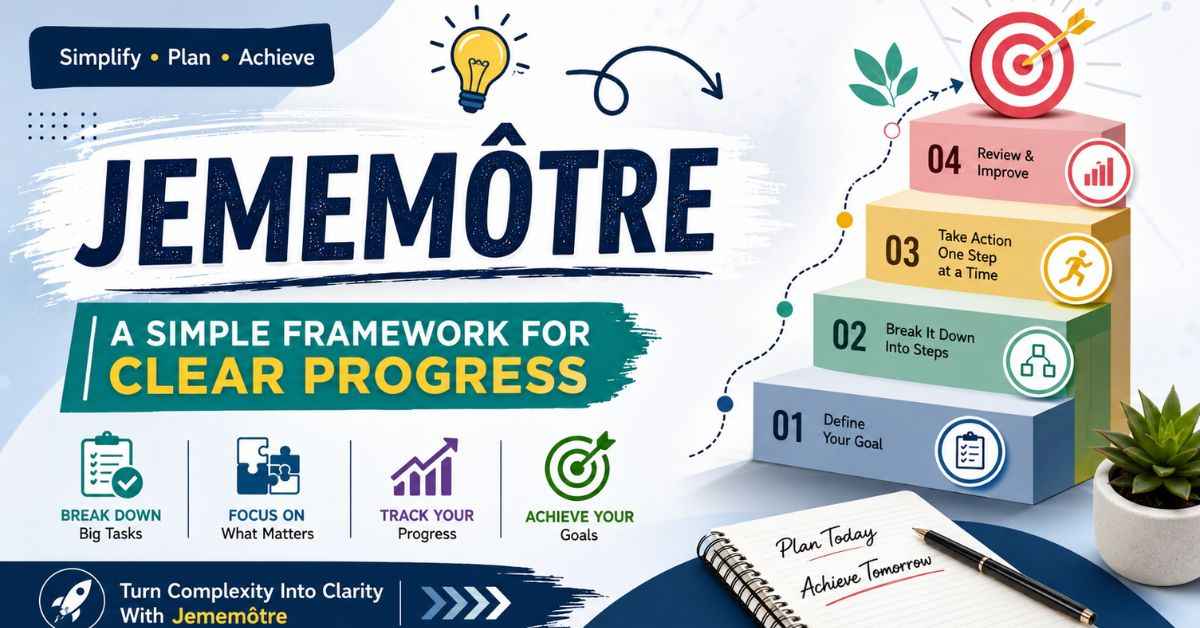
At its core, it works around four simple ideas:
- Know what the task really is.
- Break it into small actions.
- Put those actions in the right order.
- Track progress without overthinking.
For example, “start a blog” feels big. A Jememôtre-style breakdown would turn it into smaller steps: choose a niche, write five topic ideas, create one article outline, draft the first post, edit it, and publish it.
That makes the work easier because your brain no longer has to hold the whole project at once. You only need to focus on the next useful step.
This is why Jememôtre fits modern life. It is flexible enough for school, work, creative projects, personal habits, and digital planning.
How Jememôtre Works in Real Life

Seeing this idea in action is the best way to understand it. It’s not just making a list of things to do. It is about changing a vague task into a clear path.
A normal to-do list might say:
“Prepare a presentation.”
That sounds simple, but it hides many smaller tasks. You may need to research, make slides, design visuals, practice, check timing, and prepare notes. When all of that stays hidden inside one line, the task feels harder than it needs to be.
A better breakdown would look like this:
- Define the presentation topic.
- Collect three useful sources.
- Write a simple outline.
- Create slide titles.
- Add key points to each slide.
- Design visuals.
- Practice once.
- Make final edits.
Now the project feels possible. You can complete one step, see progress, and continue.
| Situation | Big Task | Jememôtre-Style Breakdown |
| Student | Study for exam | Review chapters, make notes, solve questions, revise weak areas |
| Blogger | Write article | Research topic, outline headings, draft, edit, add images |
| Worker | Finish report | Collect data, organize points, write sections, proofread |
| Creator | Plan content | Choose theme, list ideas, create calendar, prepare posts |
This method helps because it reduces mental pressure. It also helps you notice missing steps before they become problems.
Jememôtre is especially useful when a task has more than three moving parts. If something can be done in two minutes, just do it. If it feels unclear, break it down.
Featured Snippet: How to Use Jememôtre Step by Step
Jememôtre is a task-breakdown method that turns complex work into smaller, ordered actions. To use it, define the main goal, divide it into simple steps, arrange the steps by priority, complete one action at a time, and review progress regularly.
Here is a simple process:
- Name the real goal: Write the exact outcome you want. Avoid unclear goals like “be productive.” Use clear goals like “finish the first draft of my article.”
- List every small action: Write all steps without worrying about order. Your first list may look messy, and that is fine.
- Remove weak or unnecessary steps: Some tasks feel important but do not move the goal forward. Delete or delay them.
- Put actions in order: Ask, “What must happen first?” So you don’t waste time on steps that don’t need to be done right away.
- Set a small deadline: Time each step in a way that makes sense. A deadline keeps the task from staying open forever.
- Review and adjust: After finishing a few steps, check if the plan still makes sense. Good systems stay flexible.
This process works well with digital planners, notebooks, spreadsheets, task apps, or simple sticky notes. The tool matters less than the clarity of the steps.
Common Mistakes People Make with Jememôtre
Jememôtre works best when it stays simple. Many people weaken the method by turning it into another complicated productivity system.
The first mistake is breaking tasks into too many tiny pieces. If every action becomes too small, planning takes more time than doing the work. A good step should be small enough to start, but meaningful enough to create progress.
The second mistake is skipping priorities. Not all steps matter equally. Some actions unlock the whole project, while others only polish the final result. Start with the steps that create movement.
The third mistake is using the system only when life feels chaotic. It works better when you do it every day. When used weekly or daily, it prevents confusion before it grows.
| Mistake | Why It Hurts Progress | Better Approach |
| Making too many steps | Planning becomes tiring | Use 5–8 steps for most tasks |
| Starting anywhere | Important work gets delayed | Choose the first required action |
| Ignoring deadlines | Tasks stay unfinished | Add realistic time limits |
| Tracking everything | The system feels heavy | Track only meaningful progress |
Another mistake is expecting instant motivation. Jememôtre does not remove effort. It only makes effort easier to direct.
Also, avoid using it as a way to delay action. If you spend an hour designing the perfect checklist but never start the task, the framework is not helping. The goal is movement, not perfect planning.
Pro Tips and Best Practices
The best way to use Jememôtre is to keep it light, visual, and action-focused. You should always be able to look at your plan and understand what to do next within a few seconds.
Use clear action verbs. Instead of writing “research,” write “find three reliable sources.” Instead of “website,” write “update homepage headline.” Action words reduce confusion.
Connect each step with a purpose. “Why is this step important?” If you can’t answer, the step might not be part of the plan.
Use the SMART idea when a task needs more structure. A good step should be clear, measured, doable, important, and have a due date. For example, “write article” is weak. It is preferable to state, “Write 500 words before 5 PM.”
You can also pair this framework with AI tools. For example, you can ask an AI assistant to turn a large goal into a draft checklist. Then review the list yourself. AI can help you plan, but you should still decide what matters most.
For students, use it before studying. Break a chapter into key terms, examples, practice questions, and revision.
For workers, use it before meetings. Break the meeting goal into agenda points, decisions needed, questions, and follow-up actions.
For creators, use it before publishing. Break the content process into idea, outline, draft, design, caption, schedule, and review.
A useful rule is this: if a task feels stressful, it is probably too vague. You should make it shorter, easier to read, and smaller.
FAQs
What is Jememôtre used for?
Jememôtre is used to break complex tasks into clear and manageable steps. It helps students, workers, creators, and everyday users reduce confusion and understand what to do next. It is most useful for projects that feel too large, vague, or stressful to start.
Is Jememôtre the same as a to-do list?
No, Jememôtre is not exactly the same as a to-do list. A to-do list often stores tasks, while this framework organizes a larger goal into ordered steps. It helps you see the path from start to finish instead of only listing separate actions.
Can students use Jememôtre for studying?
Yes, students can use Jememôtre to organize study sessions, assignments, and exam preparation. A student can break a subject into chapters, notes, practice questions, weak areas, and revision blocks. This makes learning feel less stressful and easier to manage.
Can Jememôtre work with productivity apps?
Yes, Jememôtre can work with productivity apps, digital planners, calendars, and simple note tools. The method does not depend on one platform. You can use it in Notion, Trello, Google Keep, paper notebooks, spreadsheets, or any tool that lets you organize steps.
Why does breaking tasks into steps help focus?
Breaking tasks into steps helps focus because the brain can handle a clear next action better than a large unclear goal. When a project feels too big, people often delay it. Smaller steps reduce pressure and make it easier to start.
What should I do if the system feels complicated?
If the system feels complicated, reduce your plan to three things: goal, next step, and deadline. You do not need a perfect chart or detailed tracker. The method should make work easier, not create another task that drains your time.
Is Jememôtre useful for teams?
Yes, Jememôtre is useful for teams because it makes responsibilities clearer. A team can break a project into roles, deadlines, deliverables, and review points. This reduces confusion, prevents repeated work, and helps everyone understand what needs to happen next.
Conclusion
Jememôtre is useful because it solves a real problem: people often know what they want to achieve, but they do not know how to start. By breaking large goals into smaller actions, it turns pressure into progress and confusion into clarity.
The best way to benefit from Jememôtre is to use it simply. Define the goal, choose the next step, set a realistic deadline, and keep moving. When used consistently, this framework can support better learning, planning, productivity, and daily confidence.