
 By
By Introduction
Developers already have many places to learn, share code, and follow updates. Lack of platforms is not the actual issue. The problem is finding a focused space where useful technical discussion does not get buried under random posts, spam, or weak advice. That is why many people are searching for Programgeeks Social.
At its best, a developer-centered community can help programmers share projects, ask better questions, follow tool updates, and meet people with similar technical goals. But because newer platforms can change quickly, readers should look at Programgeeks Social with both interest and care.
This guide explains what it is, who may benefit from it, how it may compare with larger platforms, and how to use it safely. You will also learn how programgeeks social media, programgeeks social media new, and programgeeks social media news searches connect with the larger trend of developer-focused networking in 2026.
What Is Programgeeks Social and Who Is It For?
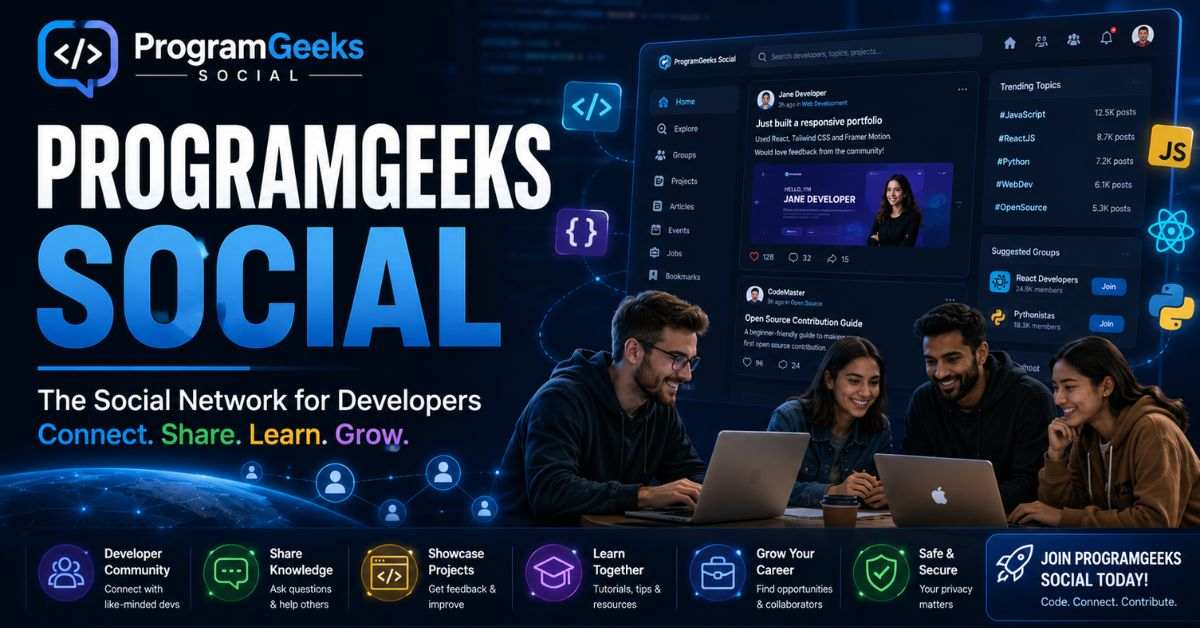
Programgeeks Social is best understood as a developer-focused social and community concept connected with technology learning, programming discussion, project sharing, and digital networking. It appears to attract people who want a more focused space than broad social platforms.
Instead of scrolling through unrelated content, users may look for coding tips, software updates, AI tools, web development ideas, cybersecurity discussions, and project feedback.
The platform idea is especially relevant for:
- Beginner programmers who need simple explanations
- Students learning software development
- Freelancers who want to show skills
- Tech bloggers and creators sharing tutorials
- Developers looking for focused discussions
- Startup teams seeking feedback on digital tools
The key point is simple: Programgeeks Social should not be treated as a direct replacement for GitHub, Stack Overflow, LinkedIn, or Discord. A smarter view is to see it as a possible extra community layer where tech-minded users can connect and exchange useful ideas.
How It Fits Into Modern Developer Culture
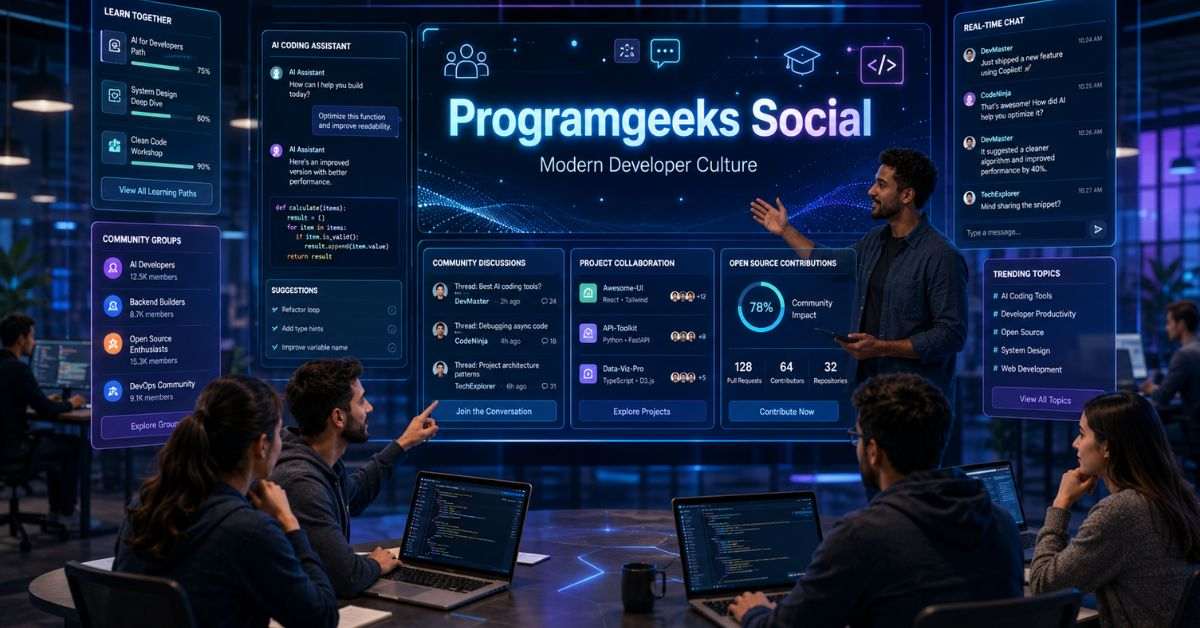
Developer culture has changed a lot since AI coding tools became common. Many basic code questions are now answered quickly by AI assistants. This means online communities need to offer more than simple answers.
A strong developer community in 2026 should help users with:
- Real project feedback
- Tool recommendations
- Career direction
- Code review discussions
- Trustworthy tech updates
- Clear learning paths
- Human experience that AI cannot fully replace
This is where Programgeeks Social may become useful if it builds active discussion, good moderation, and reliable topic organization.
Main Features Users May Expect From a Developer Social Platform
Because public details can change, users should verify features directly on the platform before depending on them. Still, most developer-centered social spaces usually include similar community features.
| Feature | Why It Matters for Users |
| Developer profiles | Helps users show skills, interests, and project links |
| Topic groups | Makes it easier to follow coding, AI, cybersecurity, or web topics |
| Project sharing | Allows feedback on apps, websites, tools, and experiments |
| Discussion threads | Helps users ask questions and share experience |
| Learning posts | Supports tutorials, guides, and quick tips |
| Social interaction | Builds networking between students, freelancers, and developers |
For example, a beginner learning JavaScript might use Programgeeks Social to follow web development groups, share a small calculator app, ask for feedback, and collect advice from more experienced users.
A freelancer could use the same space to post a case study, explain a website redesign, and connect with people who need similar technical work.
A tech blogger could follow programgeeks social media news topics to find article ideas based on what developers are discussing.
Programgeeks Social: Quick Definition for Featured Snippet
Programgeeks Social is a tech-focused social networking concept for developers, programmers, students, freelancers, and technology enthusiasts. It is designed around coding discussions, project sharing, learning resources, and community interaction rather than general entertainment content.
In simple words, it aims to give tech users a more focused place to learn, connect, and share useful knowledge.
How It Compares With Other Developer Platforms
| Platform | Main Use | Best For |
| Programgeeks Social | Developer networking and tech discussions | Learning, sharing, and community interaction |
| GitHub | Code hosting and version control | Open-source projects and repositories |
| Stack Overflow | Technical Q&A | Solving specific coding problems |
| Professional networking | Jobs, hiring, and career branding | |
| Discord | Real-time chat communities | Fast group discussion and live support |
The best approach is not to choose only one platform. Use each one for its strongest purpose.
For example, host your project on GitHub, solve technical bugs through official docs and Stack Overflow, build your professional profile on LinkedIn, and use Programgeeks Social for discussion, learning, and community feedback.
Common Mistakes Users Should Avoid
The biggest mistake is assuming every newer tech platform is automatically reliable. A clean design and active posts do not always prove strong moderation, privacy protection, or expert-level advice.
Here are common mistakes to avoid:
- Sharing private API keys, passwords, or client project files
- Trusting code snippets without testing them
- Downloading files from unknown users
- Believing every tool recommendation
- Posting only self-promotion instead of useful content
- Joining too many groups without a clear goal
- Ignoring privacy settings and account security
A smart user should treat Programgeeks Social like any other online community. Be curious when you join, but keep your info safe.
How to Check Content Quality
Before using advice from any developer community, ask:
- Does the answer explain why it works?
- Does it link to official documentation when needed?
- Are other users confirming or correcting it?
- Is the advice recent enough for the tool or language version?
- Can you test it safely in a sample project first?
This habit matters because programming advice can become outdated fast. A solution that worked two years ago may not work with newer frameworks, libraries, or security rules.
Pro Tips and Best Practices for Better Results
To get real value from Programgeeks Social, do not use it like a random feed. Use it with a clear plan.
Start by creating a simple profile. Mention your skills, learning goals, favorite technologies, and project interests. A clear profile makes it easier for other users to understand who you are.
Next, follow only the topics that match your goals. A front-end learner may follow HTML, CSS, JavaScript, React, UI design, and web performance. A cybersecurity learner may follow network security, ethical hacking basics, privacy tools, and secure coding.
Here is a simple first-week plan:
- Complete your profile.
- Follow three to five relevant topic groups.
- Read existing discussions before posting.
- Share one useful learning update.
- Ask one clear question with context.
- Comment on two helpful posts.
- Save useful resources for later.
For programgeeks social media new users, this method works better than posting random links. Communities reward useful participation.
Best Content Ideas to Share
Good posts usually help people solve a real problem. Try these ideas:
- “What I learned while building my first React app”
- “Three mistakes I made while setting up hosting”
- “A simple checklist for safer WordPress plugins”
- “How I fixed a slow page speed issue”
- “My favorite free tools for beginner developers”
- “A beginner-friendly explanation of API keys”
If you follow programgeeks social media news, you can also share short summaries of important updates. Just make sure you check the original source before posting.
FAQs
Is Programgeeks Social a real developer platform?
Programgeeks Social appears to be connected with developer-focused community discussions and technology content, but users should verify current platform details directly. Newer platforms can change features, policies, or positioning quickly. Always check official pages, privacy policies, and active community quality before relying on it.
What can users do on Programgeeks Social?
Users may use Programgeeks Social for tech discussions, project sharing, learning updates, networking, and following software-related topics. The best use is practical participation, such as asking clear questions, sharing small projects, and joining focused groups around programming, AI, cybersecurity, or web development.
Is Programgeeks Social Media useful for beginners?
Yes, programgeeks social media can be useful for beginners if the community offers clear discussions, helpful users, and beginner-friendly content. New learners should start with simple posts, follow basic coding topics, and avoid copying code without understanding or testing it.
Can Programgeeks Social replace GitHub or Stack Overflow?
No, Programgeeks Social should not replace GitHub or Stack Overflow. GitHub is stronger for code hosting, while Stack Overflow is stronger for specific technical questions. A developer social platform works better as a support space for networking, learning, and project feedback.
How should I verify Programgeeks Social Media News?
Check credible tech magazines, official documents, dates, and authentic sources to validate programgeeks’ social media news. Do not depend only on community posts for important software, security, or career decisions. Treat social updates as starting points, not final proof.
What should I post first on Programgeeks Social?
Your first post should introduce your learning goal, current skill level, and one topic you want to improve. For example, you can say you are learning Python and building small automation scripts. Clear posts attract better replies than vague questions like “help me code.”
Is Programgeeks Social safe to use?
Programgeeks Social can be safe if users follow basic online safety rules and the platform has strong moderation. Do not share passwords, private code, payment details, or confidential client work. Use strong passwords, enable two-factor authentication if available, and avoid unknown downloads.
Conclusion
Programgeeks Social reflects a real need in today’s developer world: focused online spaces where programmers, students, freelancers, and tech fans can learn without too much noise. If the platform supports useful discussions, project sharing, good moderation, and clear privacy rules, it can become a helpful part of a developer’s learning routine.
The smartest way to use Programgeeks Social is to treat it as a community tool, not a magic solution. Use it beside GitHub, Stack Overflow, official documentation, and trusted tech sources. That balanced approach gives you the best chance to learn faster, stay updated, and build meaningful connections.