 By
By Introduction
Growing music on Spotify can feel slow, unfair, and confusing. You may release a strong song, share it everywhere, and still see low plays or followers. That is why services like SpotifyStorm attract attention from independent artists who want faster visibility.
But buying plays, followers, or saves is not the same as building a loyal fanbase. Some numbers can look good on the surface while creating problems behind the scenes. Spotify says artificial streams are streams that do not reflect real listening intent, including attempts to manipulate the platform with bots or scripts.
This review explains what the platform offers, where it fits in music marketing, what risks to consider, and how artists can promote music more safely.
What Is SpotifyStorm and What Does It Offer?
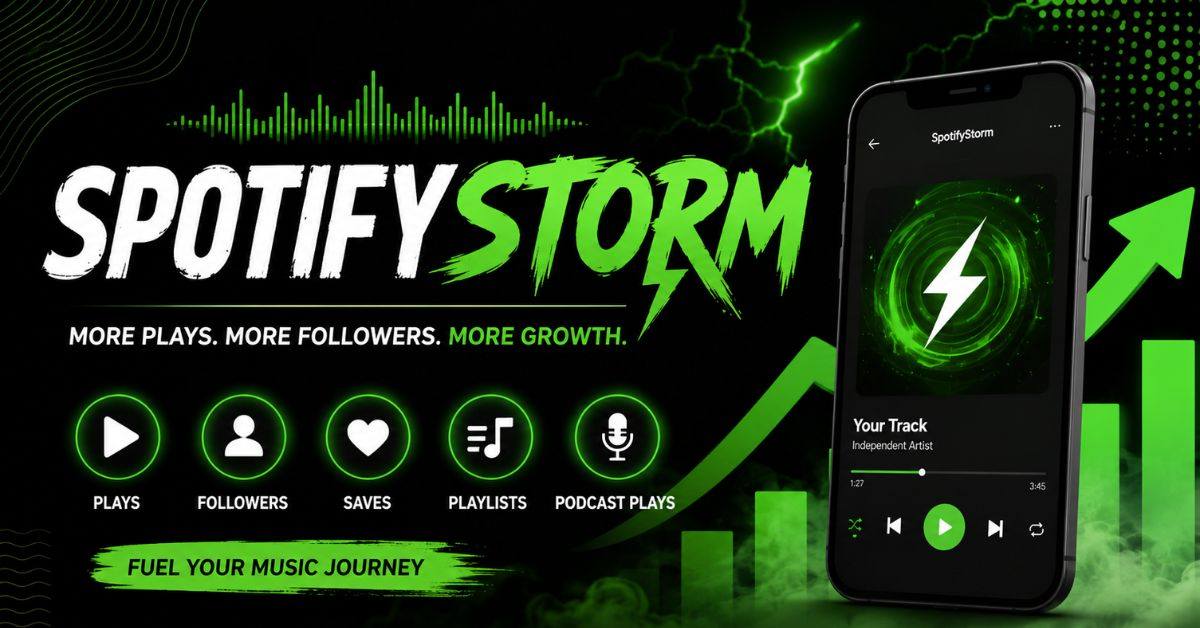
SpotifyStorm is a third-party music-marketing platform that sells Spotify growth packages. Its services include followers, plays, playlist followers, playlist plays, podcast plays, and saves. Its own site also promotes features such as fast delivery, gradual delivery, no password requirement, and support.
In simple words, it sells numbers that appear on or around Spotify content. These numbers may include:
- More plays on a track
- More followers on an artist profile
- More saves on a song
- More followers or plays for playlists
- More podcast plays
For a new artist, these offers can feel tempting. A song with 10,000 plays may look more credible than a song with 80 plays. A playlist with more followers may seem more active. A profile with higher follower counts may appear more established.
The problem is that music success is not only about visible numbers. Spotify growth depends on real listener behavior, such as repeat listening, saves from interested fans, playlist adds, location data, skip rate, and listener quality.
If the activity does not come from people who actually care about the music, it may not help the artist’s long-term career.
How Does SpotifyStorm Compare With Real Music Promotion?
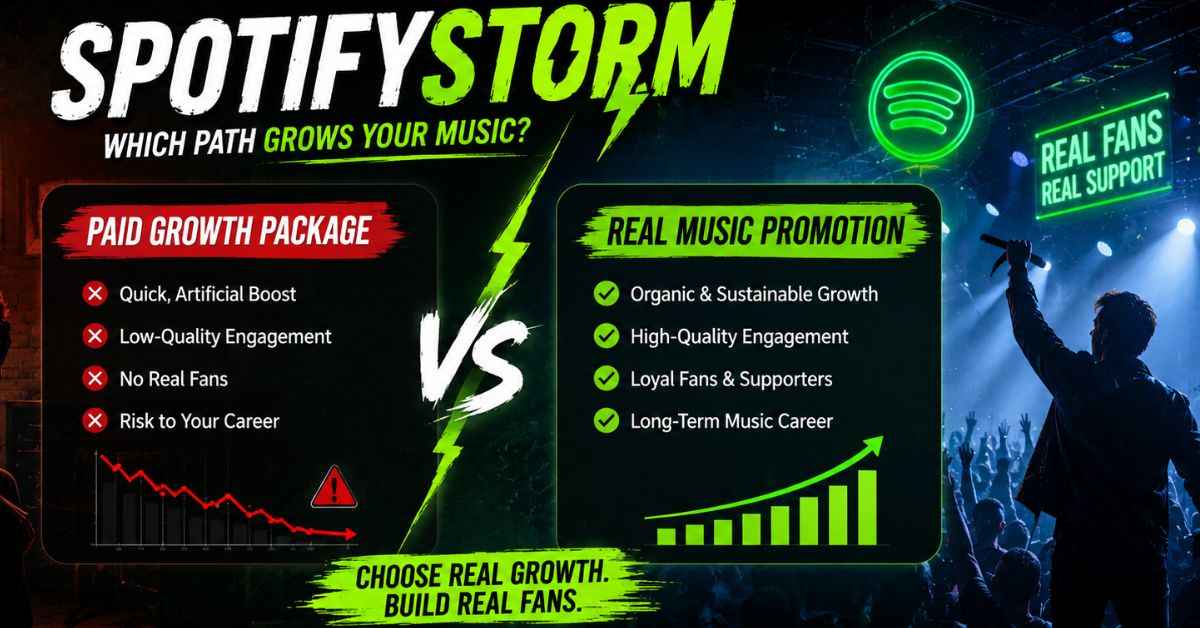
A paid growth package and a real music-promotion campaign are not the same thing. One may increase visible metrics quickly. The other tries to reach people who may become real fans.
| Growth Method | What It Usually Does | Main Risk | Best Use |
| Paid artificial growth package | Adds plays, saves, or followers quickly | Low-quality engagement, policy risk, weak fan value | High risk; use caution |
| Organic social promotion | Sends real people from TikTok, Instagram, YouTube, or email | Slower results | Building loyal fans |
| Spotify playlist pitching | Submits unreleased music to Spotify editors | No guaranteed placement | Legitimate discovery |
| Display campaigns | Uses official Spotify ad formats like Marquee or Showcase | Requires eligibility and budget | Safer paid promotion |
Spotify’s own tools focus on real fan discovery. Spotify for Artists lists Campaign Kit tools such as display campaigns, Discovery Mode, and playlist pitching for artists and music marketers.
This matters because artist growth is not just about one track. Real growth should help future releases, live shows, merch sales, collaborations, and fan retention.
Is SpotifyStorm Safe for Artists? A Direct Answer
Since SpotifyStorm is a third-party Spotify growth service, artists should consider it a high-risk option if it offers guaranteed growth, paid plays, follows, or saves. Spotify states that paid third-party services advertising streams in return for payment violate its terms and may lead to consequences such as removed music, withheld royalties, corrected stream counts, or distributor warnings.
That does not mean every artist will face the same result. It means the risk exists, especially if the engagement looks artificial or abnormal.
Spotify says suspicious signs can include sudden unexplained stream spikes, unusual location jumps, surprising traffic sources, or short-lived follower growth.
Artists should also understand that “no password required” does not remove all risk. It may reduce account-login risk, but it does not remove the risk of artificial engagement being detected on a track.
Why Artificial Growth Can Hurt Artist Data
A small artist needs clean data. Your Spotify for Artists dashboard tells you who listens, where they live, which songs work, and what marketing channels perform best.
Artificial or low-quality traffic can distort that picture.
For example, imagine a UK-based indie pop artist who normally gets listeners from London and Manchester. After buying a package, the song suddenly gets thousands of plays from countries where the artist has no audience, no ads, and no social activity. The artist may think the song is spreading globally, but the data may not reflect real demand.
That can lead to bad decisions, such as:
- Targeting the wrong countries with ads
- Pitching the wrong audience story to labels
- Misreading fan interest
- Building a release plan around fake signals
- Losing trust with a distributor or manager
Spotify also says confirmed artificial streams may not earn royalties, may not count toward public numbers or charts, and may not improve recommendation algorithms.
That is a major point. If paid engagement does not help recommendations, charts, or royalties, the visible number may offer less value than artists expect.
Will SpotifyStorm Help You Grow or Just Inflate Numbers?
SpotifyStorm may create a short-term rise in visible metrics, but visible growth is not always meaningful growth. A serious artist should ask: “Will these people listen again, follow me on other platforms, save future songs, buy tickets, or share my music?”
If the answer is no, the growth may be cosmetic.
Real Spotify momentum usually comes from listener actions that show interest. These include:
- A listener plays the song because they like the sound.
- They save it or add it to a personal playlist.
- They replay it later.
- Spotify learns that similar listeners may enjoy it.
- The track gets more chances in algorithmic spaces.
It is difficult to replicate the procedure in a healthy manner. A high play count with poor repeat listening may not create the signal an artist wants.
Spotify’s 2026 Loud & Clear update reported that Spotify paid more than $11 billion to the music industry in 2025 and that roughly half of royalties were generated by independent artists and labels. This shows there is real opportunity on the platform, but it also makes clean, trustworthy engagement more important.
Better Alternatives for Spotify Growth
Artists do not need to rely on risky shortcuts. Safer promotion may be slower, but it creates stronger results.
| Safer Option | Why It Helps | Simple Example |
| Spotify editorial pitching | It is Spotify’s official route for unreleased music | Pitch one focus track before release |
| Short-form video | Sends real listeners from TikTok, Reels, or Shorts | Post the song hook with a story angle |
| Email or SMS fan list | Builds an audience you control | Send release links to existing fans |
| Creator outreach | Gets music into real content | Send clean audio to niche creators |
| Small ad tests | Measures real listener response | Test $5–$20 daily campaigns |
Spotify says Spotify for Artists is the only way to submit new music for playlisting, and artists should give editors clear details about the song, genre, story, and location.
Display campaigns are another official option, though they have eligibility rules. Spotify says Marquee and Showcase campaigns put music in front of likely listeners, with Marquee for new releases and Showcase for new or catalog releases.
For many independent artists, the best plan is a mixed strategy: strong release planning, short-form video, playlist pitching, fan communication, and careful ad testing.
Common Mistakes Artists Make With Paid Spotify Growth
The biggest mistake is thinking all numbers are equal. They are not. A real save from a fan is more valuable than many weak plays from people who never return.
Another mistake is using SpotifyStorm or similar services before the artist has a complete profile. If your bio, images, social links, artist pick, Canvas, and release story are weak, extra traffic will not fix the brand.
Artists also make these mistakes:
- Buying too much growth at once
- Ignoring sudden location spikes
- Believing “guaranteed streams” without checking policy risk
- Using paid growth instead of building a fan funnel
- Measuring success only by play count
- Forgetting to ask their distributor about artificial streaming rules
A smarter question is not “How can I get more plays today?” It is “How can I attract listeners who will still care six months from now?”
Pro Tips and Best Practices for Safer Music Promotion
Before using SpotifyStorm, compare the offer with Spotify’s official guidance. If a service promises guaranteed streams, guaranteed playlist placement, or algorithmic priority in exchange for money, treat it as a red flag.
Use this safer checklist:
- Check the promise: Avoid services that guarantee streams or playlist placement.
- Ask about methods: Real marketing should explain targeting, ads, creators, or PR.
- Watch your data: Look for strange traffic sources or sudden spikes.
- Keep records: Save receipts, campaign details, and communication.
- Talk to your distributor: Ask what happens if suspicious activity appears.
- Invest in real assets: Improve visuals, hooks, press photos, videos, and fan capture.
A practical approach is to spend most of your budget on content and fan acquisition, not vanity metrics. For example, instead of buying 10,000 plays, an artist could test three video hooks, run a small ad to the best one, and retarget people who are engaged.
That builds useful data and real audience signals.
FAQs
Is SpotifyStorm legit?
SpotifyStorm is a real third-party website that sells Spotify growth packages, but “legit” depends on what you mean. It may process orders, but artists should judge it against Spotify’s artificial-streaming rules. Paid services that guarantee streams or similar outcomes can create policy and data-quality risks.
Can SpotifyStorm get my music removed?
SpotifyStorm-related activity could contribute to risk if Spotify detects artificial streaming or manipulation. Spotify says consequences may include withheld royalties, corrected stream counts, playlist removal, distributor warnings, or music removal in serious cases. The risk depends on activity quality, scale, and detection.
Does buying Spotify plays help the algorithm?
Buying Spotify plays does not reliably help the algorithm because Spotify says artificial streams do not positively influence recommendation systems. Real algorithmic growth comes from genuine listening behavior, such as saves, repeat plays, low skips, playlist adds, and listener retention.
What is the safest way to promote a new Spotify release?
The safest way to promote a new Spotify release is to combine official playlist pitching, short-form content, fan outreach, and careful ad testing. This builds real listener signals. Pitch early, explain the song clearly, and send traffic from platforms where your target audience already spends time.
Should new artists buy Spotify followers?
New artists should be very careful about buying Spotify followers because follower count alone does not build a career. A smaller real audience is better than a larger inactive one. Real followers return to new releases, engage with content, and help improve future campaign decisions.
What should I do if I already bought paid Spotify growth?
If you have previously purchased paid Spotify growth, keep a close eye on your Spotify for Artists data and get in touch with your distributor if any strange activity emerges. Save the specifics of the service you utilized. If you see strange playlists, location spikes, or sudden drops, report the issue and stop using risky services.
Are there legal alternatives to artificial Spotify growth?
Yes, legal alternatives include Spotify playlist pitching, display campaigns, creator outreach, social ads, email marketing, and music PR. These methods focus on real listeners instead of artificial metrics. They may take longer, but they protect your data and support long-term fan growth.
Conclusion
SpotifyStorm may look attractive because it offers quick plays, saves, and followers, but artists should not confuse fast numbers with real music growth. The bigger issue is not only whether an order is delivered. The bigger issue is whether the engagement is genuine, useful, and safe under Spotify’s rules.
A serious artist should build a promotion plan around real fans, clean data, and long-term trust. If you want lasting results, use official Spotify tools, improve your release strategy, and spend money on campaigns that bring listeners who may actually care about your music.