 By
By Introduction
You may have searched for Photoackmp after seeing it described as a new AI photo tool, only to find unclear explanations and bold feature claims. That confusion matters: uploading original photos, client work, or private videos to an unknown service can affect image quality, ownership, and privacy.
The most useful way to understand the term is as an online label for a modern editing workflow: AI-assisted adjustments, searchable media organization, and non-destructive changes that preserve the original file. This article explains what is plausible, what must be verified, and how creators can test any similar tool safely.
What Is Photoackmp, and Is It a Real Editing Product?
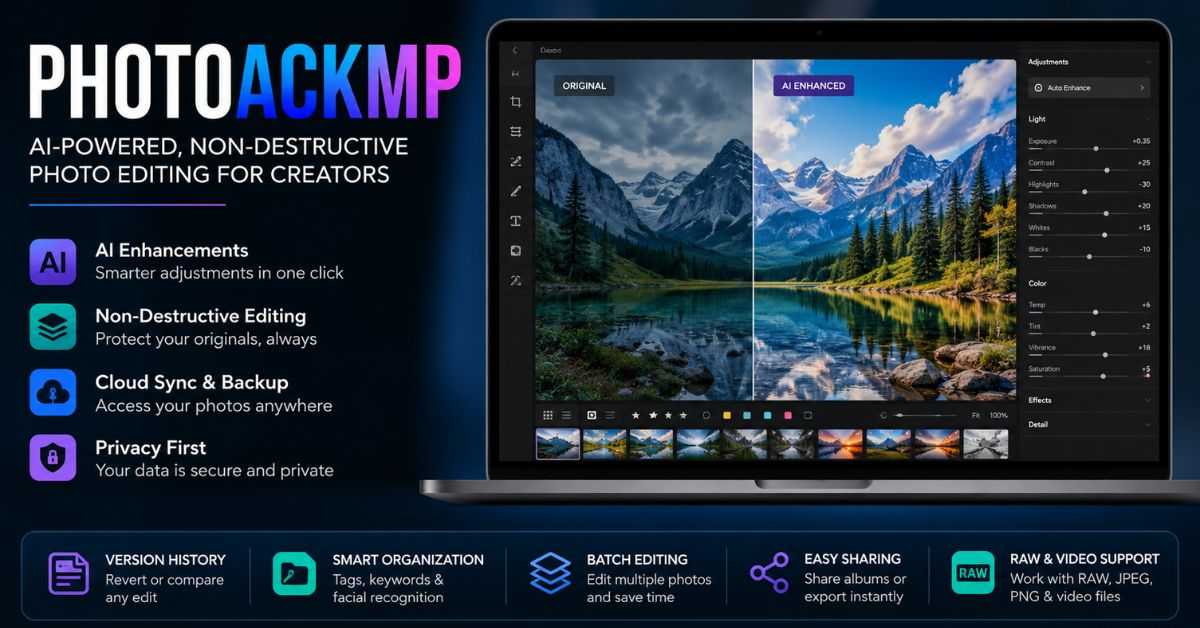
Photoackmp is an online term associated with AI-assisted photo editing and image management, but a verified official product identity is not clear from the supplied sources. Readers should treat it as a concept or possible software name until they can find an official website, developer identity, terms, privacy policy, download source, and documented features.
The available pages disagree on what the term means. One presents it as an editing app with filters, cloud storage, RAW support, and paid plans. Another presents it as a broad image-management platform with indexing, facial recognition, offline use, enterprise security, and APIs. Those are very different products, so readers should not rely on either description alone.
This careful approach is not a weakness. It protects photographers from installing unknown software or handing over original files based on claims that have not been independently confirmed.
| Claim Seen Online | What a Reader Should Verify Before Relying on It |
| AI retouching or background removal | Actual editor demo, export quality, and whether AI edits are disclosed |
| RAW and video support | Supported camera or video formats and test-file results |
| Cloud storage and encryption | Privacy policy, storage location, deletion controls, and security details |
| Free or paid plan | Official pricing page and cancellation terms |
What Should a Modern Non-Destructive Editing Workflow Do?
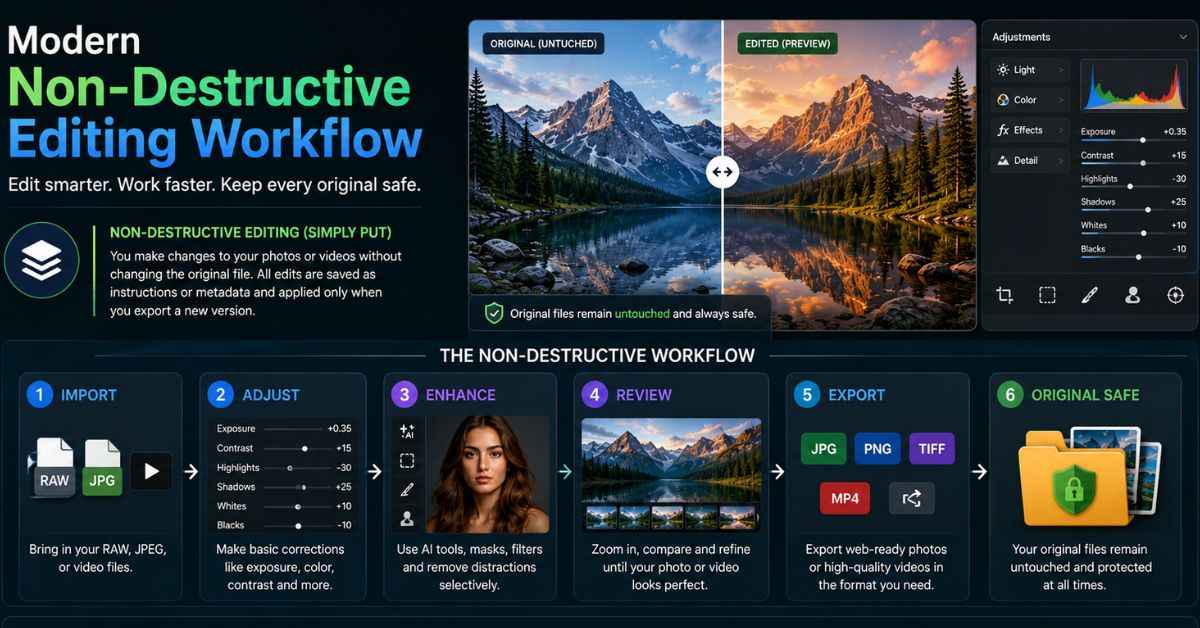
A credible AI-assisted editor should help you work faster without destroying the master file. Adobe defines non-destructive editing as making changes without overwriting original image data; edits can be stored as instructions or metadata and applied when a new version is exported. That principle is more important than any unfamiliar app name.
In practice, a useful workflow should let a photographer import a RAW or original JPEG, adjust exposure and color, apply selective masks, remove distractions, and export web-ready copies while keeping the untouched master safe. For a video creator, the same idea means preserving source clips while saving color, crop, caption, or enhancement decisions separately.
A wedding photographer offers a simple example. The photographer can protect original RAW files, use AI to suggest exposure balancing across hundreds of shots, review every face and skin-tone adjustment manually, then export approved JPEGs for the client gallery. Speed helps; human review preserves quality and trust.
A small online store may use a similar workflow for product photographs. It can standardize backgrounds and crops across catalog images, but it should keep an original version for accurate color checking and avoid edits that misrepresent the product.
How Can You Evaluate a Photoackmp-Style Tool Safely?
Use this quick process before trusting Photoackmp or any AI photo editor with valuable files:
- Confirm who publishes it: Look for a legitimate developer name, official domain, contact details, terms of service, privacy policy, and an authentic app-store or software download page.
- Test copies, never originals: Import duplicated images first. Confirm the original remains unchanged after edits, exports, syncing, and deletion.
- Check format and export support: Try the files you actually use: RAW, JPEG, PNG, TIFF, short video clips, or layered formats where relevant.
- Read privacy controls: Learn whether images train AI models, where cloud files are stored, how to delete them, and whether team sharing can be limited.
- Inspect authenticity features: Creators increasingly need edit transparency. C2PA Content Credentials provide an open technical standard for establishing the origin and editing history of digital media.
- Compare real costs: Only accept pricing, storage allowances, device support, or collaboration features shown in verified documentation.
| User Need | Useful Feature to Look For | Basic Verification Test |
| Preserve image quality | Non-destructive adjustments and version history | Edit a copy, then confirm the original file remains unchanged |
| Edit many photos | Batch adjustments with manual review | Apply changes to ten images and inspect faces, products, and skies |
| Protect private shoots | Local processing or clear cloud controls | Check upload settings, access permissions, and permanent deletion options |
| Publish trustworthy images | Provenance or edit-history support | Export an image and check whether credentials remain visible or verifiable |
Common Mistakes When Exploring New AI Photo Tools
The first mistake is believing every feature list. A polished article can name encryption, RAW support, collaboration, or pricing without providing an official source. Until confirmed, treat these as questions to ask, not promises delivered by Photoackmp.
Putting up only copies is the second mistake. Non-destructive claims mean little if a user accidentally replaces a master file, loses metadata, or cannot retrieve cloud files. Keep originals in a separate backup location before experimenting.
A third mistake is trusting automatic retouching without review. AI may brighten a face beautifully in one photo and change skin texture, product color, text, or background details incorrectly in another. Check edits at full resolution before publishing or sending them to a client.
Finally, do not ignore privacy. Family portraits, school images, client events, identity documents, and unreleased product photos deserve stricter handling than a casual landscape image.
Pro Tips and Best Practices for Creators
Begin with a simple folder rule: originals, working files, and exports should stay separate. Never let an experimental editor become the only home of your files. A local backup plus a second backup gives you a path back when software changes or an account closes.
Use AI for repetitive help, not final judgment. Auto culling, subject masking, noise reduction, keyword suggestions, and rough color matching can save time. A creator still needs to approve important edits, accessibility-friendly crops, copyright-sensitive assets, and branded product colors.
For client or commercial images, record what you changed. A transparent workflow may include original filenames, edit notes, export dates, usage permissions, and available provenance metadata. This becomes especially useful when an audience asks whether a promotional image was significantly altered.
Before adopting an unfamiliar editor as a regular tool, perform a small trial project: ten images, two devices, one export style, and one deletion test. A short test reveals far more than promotional wording.
FAQs
Is Photoackmp a confirmed app or software platform?
No independently verified official product identity is clear from the supplied competitor sources. Online pages describe it in different ways, so users should locate official developer documentation, terms, privacy policies, real download listings, and supported-file details before treating the name as a working software platform.
Is Photoackmp the same as Photoackmpa?
That connection cannot be confirmed from reliable official documentation identified for this guide. Similar spelling may signal a typo, a variant term, or unrelated online content. Searchers should avoid assuming they are identical until an official source states the correct product name and ownership.
Can I use this type of editor without changing my original photographs?
Yes, if the editor truly supports non-destructive editing and you use it correctly. Such workflows preserve the source image and store editing instructions separately or in metadata before export. Always test on copied files and back up originals before relying on a new service.
What privacy questions should I ask before uploading photos?
Ask whether uploads are stored, shared, used for AI training, encrypted, and permanently deletable. Also check where data is processed, whether face recognition is optional, who can access shared albums, and whether your client agreement permits cloud or AI processing of their images.
Does AI editing replace a professional photo workflow?
No; AI editing can speed up routine work, but careful review remains essential. Automated masks, exposure suggestions, cleanup, or sorting may help with large batches. Professional creators still need to protect originals, confirm accurate colors and faces, manage rights, and deliver consistent exports.
How do I know whether an edited image is transparent to viewers?
Look for a supported provenance method, such as Content Credentials, alongside your own edit records. C2PA provides a standard for recording media origin and edits, though support depends on the tool and export workflow. A visible disclosure may also be appropriate for materially changed commercial images.
Conclusion
Photoackmp is best understood as an uncertain online term connected with modern AI-assisted photo editing and management, not as a fully verified product with guaranteed features. The useful lesson is clear: preserve originals, test on copies, verify privacy and export controls, and treat unsupported claims carefully.
Creators do not need hype to improve a workflow. They need reliable tools, reversible edits, responsible AI use, and honest media handling. By applying those checks before adopting Photoackmp or any similar service, readers can edit faster while protecting quality, privacy, and trust.