

 By
By Introduction
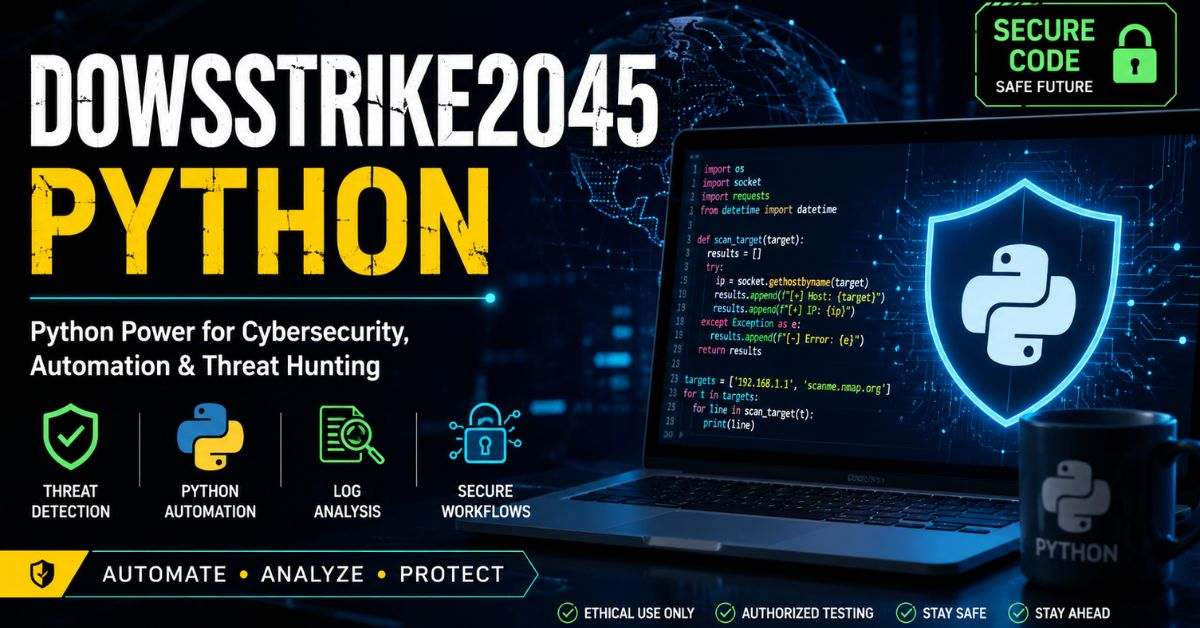
A technical-sounding tool name can look trustworthy before it earns that trust. That is the main issue with this term. People search for Dowsstrike2045 Python because they see it linked to cybersecurity, automation, threat hunting, or strange Python error logs, but public descriptions are mixed.
The safest way to understand the term is to treat it as an unclear Python/security phrase until you can verify a real maintainer, repository, package page, version history, and documentation. This guide explains what it may mean, how to evaluate it, and how to work safely if you find scripts using this name.
Why Dowsstrike2045 Python Needs a Verification-First Approach
The phrase is best placed in the cybersecurity and Python automation niche, not general software or finance. Some pages describe it like a penetration-testing toolkit. Others connect it with automation, updates, or broad technical workflows.
That inconsistency matters. Real tools usually leave a clear trail: official docs, release notes, signed updates, package records, issue history, and known maintainers. When those signs are weak or missing, you should slow down.
A verification-first approach protects you from three common problems:
- Running unknown scripts that access files, tokens, or network services
- Installing lookalike packages that use a familiar name
- Trusting vague “security tool” claims without seeing what the code does
This does not mean every file with this name is malicious. It means the name alone is not proof. Treat it like any unknown package: isolate it, inspect it, and test it without sensitive data.
Here is a safer way to interpret the phrase:
| Possible Meaning | What It Usually Implies | Safe Reader Response |
| Cybersecurity concept | Python used for scanning, logs, or threat research | Learn the method, not just the name |
| Automation script | A custom script for routine system tasks | Review permissions and dependencies |
| Error-log phrase | A module, file, or path name in a broken project | Trace the source before reinstalling |
| Claimed update | A download or upgrade tied to this phrase | Verify release notes and maintainer details |
How Python Fits Cybersecurity, Automation, and Troubleshooting
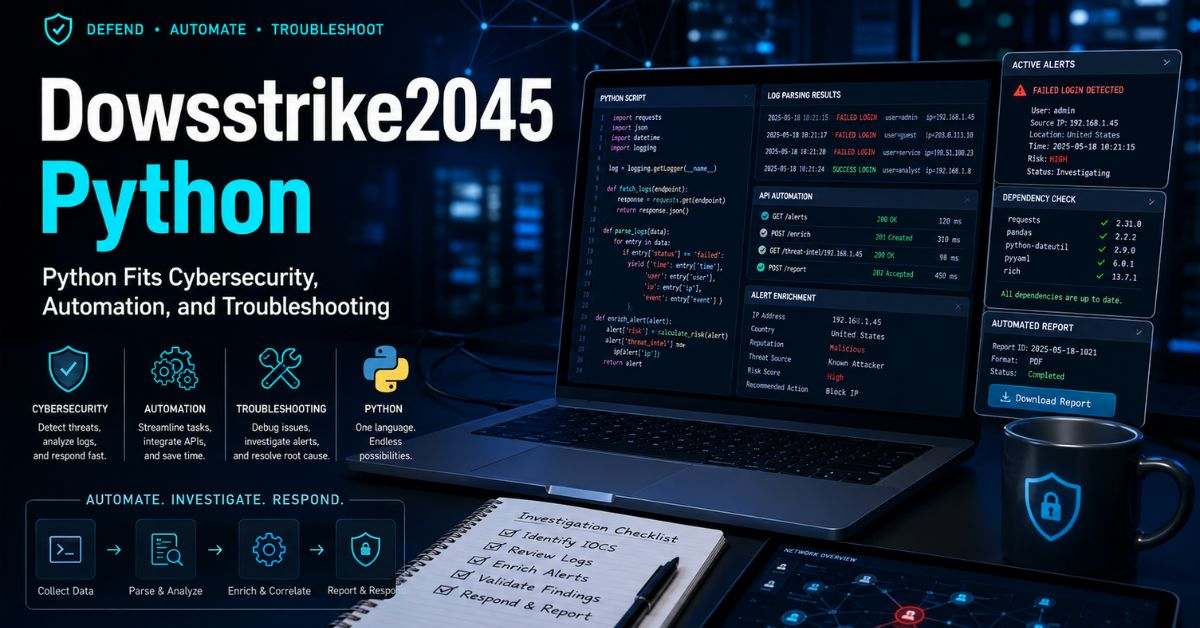
Python is popular in security work because it is readable, flexible, and supported by many libraries. Teams use it for log parsing, file checks, API automation, alert enrichment, and internal reporting. These are normal defensive uses.
For example, a blue-team analyst may use Python to parse firewall logs and highlight repeated failed login attempts. A developer may use a small script to check whether a project has outdated dependencies. A system admin may automate report generation after a vulnerability scan.
That is the practical side if the phrase appears in your workflow. Don’t just look at the name. Find out what the script does.
A safe Python security workflow should answer these questions:
- What data does the script read?
- Does it connect to the internet?
- Which packages does it install?
- Does it need admin permissions?
- Can you remove it cleanly?
- Is there a clear maintainer or project owner?
If the answer is unclear, test it only in a virtual environment or disposable sandbox. Never run an unknown security script on a main workstation, production server, or folder containing private credentials.
What Is Dowsstrike2045 Python? A Clear Definition
Dowsstrike2045 Python is an unclear online term often linked with Python-based cybersecurity, automation, or troubleshooting workflows. It should not be treated as a confirmed official library unless you can verify its source, package record, documentation, and maintainer.
In practical terms, readers should understand it as a possible concept or project name, not a trusted install command. The safest response is to investigate before running or updating anything connected to it.
A simple verification process helps:
| Checkpoint | What to Look For | Why It Matters |
| Source | Official site, repository, or package page | Confirms where it comes from |
| Version | Release number and change notes | Shows what changed |
| Maintainer | Real project owner or organization | Creates accountability |
| Dependencies | Clear requirements file | Reduces hidden package risk |
| Permissions | No unnecessary admin access | Limits damage if something fails |
| Rollback | Backup or uninstall path | Helps recover safely |
This is also where many vague pages fall short. They may describe features but not show proof. Features are not enough. Verification is what separates a useful tool from a risky download.
Common Mistakes
The first mistake is assuming Dowsstrike2045 Python is official because several blogs mention it. Repeated mentions do not equal verification. A real project should still have a clear source.
The second mistake is copying install commands from random pages. An unclear command can install the wrong package, add unnecessary dependencies, or run code you did not inspect.
The third mistake is testing with real credentials. Never use API keys, browser data, private logs, client files, or production tokens while checking uncertain software.
The fourth mistake is ignoring Python version conflicts. A script written for one version can fail on another. Broken imports, syntax errors, and dependency issues often come from mismatched environments.
The fifth mistake is treating security tools as harmless. Even defensive tools can scan networks, change files, or collect sensitive details if configured badly.
Use this rule: if you cannot explain what the script does in plain English, do not run it on an important machine.
Pro Tips and Best Practices
Start with a clean test environment. Create a new folder, use a virtual environment, and install only the packages the project clearly requires. Keep the environment separate from your main system.
Read the files before execution. Look for hidden downloads, encoded strings, hardcoded URLs, commands that change system settings, or requests for broad permissions. You do not need to be an expert to notice obvious warning signs.
Save a before-and-after record. Before testing related files, capture your package list, project tree, and configuration notes. This makes rollback easier if the update breaks something.
Prefer established tools for real work. For approved security testing, use well-documented tools and methods with permission. For threat hunting, map scripts to a clear goal such as log enrichment, alert review, or suspicious process tracking.
Keep legal boundaries clear. You can only test things that you own or have been given written permission to test. Cybersecurity learning should happen in labs, training environments, or authorized company scopes.
Finally, separate learning from installation. You can study the concept behind the term without downloading unknown files. Often, the smarter path is to learn Python automation basics and apply them safely with trusted libraries.
FAQs
Is Dowsstrike2045 Python an official Python package?
Dowsstrike2045 Python does not appear clearly verified as a mainstream official Python package from the reviewed public information. Treat it as unconfirmed unless you find an official package page, repository, documentation, maintainer details, and release history. Do not rely on blog claims alone.
What is Dowsstrike2045 Python used for?
Dowsstrike2045 Python is usually discussed in relation to cybersecurity, automation, threat hunting, or Python troubleshooting. In real use, that may mean log parsing, safe test scripts, vulnerability review workflows, or error analysis. The exact use depends on the source files and documentation.
Is it safe to install unknown Python security tools?
No, it is not safe to install unknown Python security tools without verification. Check the source, code, dependencies, version notes, and permissions first. Use a virtual environment or sandbox, and never test with private data or production credentials.
Why do different websites describe it differently?
Different websites describe it differently because the term lacks strong public verification and consistent documentation. Some treat it like a toolkit, while others discuss it as an update, concept, or automation phrase. That inconsistency is a reason to verify before trusting it.
How should beginners approach this topic?
Beginners should approach this topic by learning Python environments, package safety, and basic defensive cybersecurity workflows first. Avoid running scripts you do not understand. Practice in labs, read documentation, and focus on safe tasks like parsing sample logs or checking test files.
Can Dowsstrike2045 Python help with threat hunting?
It may help with threat hunting only if it refers to clear, reviewed scripts used in an authorized environment. Useful Python threat-hunting tasks include filtering logs, matching indicators, enriching alerts, and creating reports. The name itself does not prove capability.
Conclusion
Dowsstrike2045 Python is best understood with caution, not hype. Because public descriptions are inconsistent, readers should verify the source, inspect the code, test in isolation, and avoid installing anything that lacks documentation, version details, and maintainer transparency.
Used as a learning topic, the topic can point readers toward valuable skills: Python automation, secure updates, dependency review, and defensive security thinking. The smartest path is simple: verify first, test safely, and choose trusted tools when real systems are involved.