

 By
By Introduction
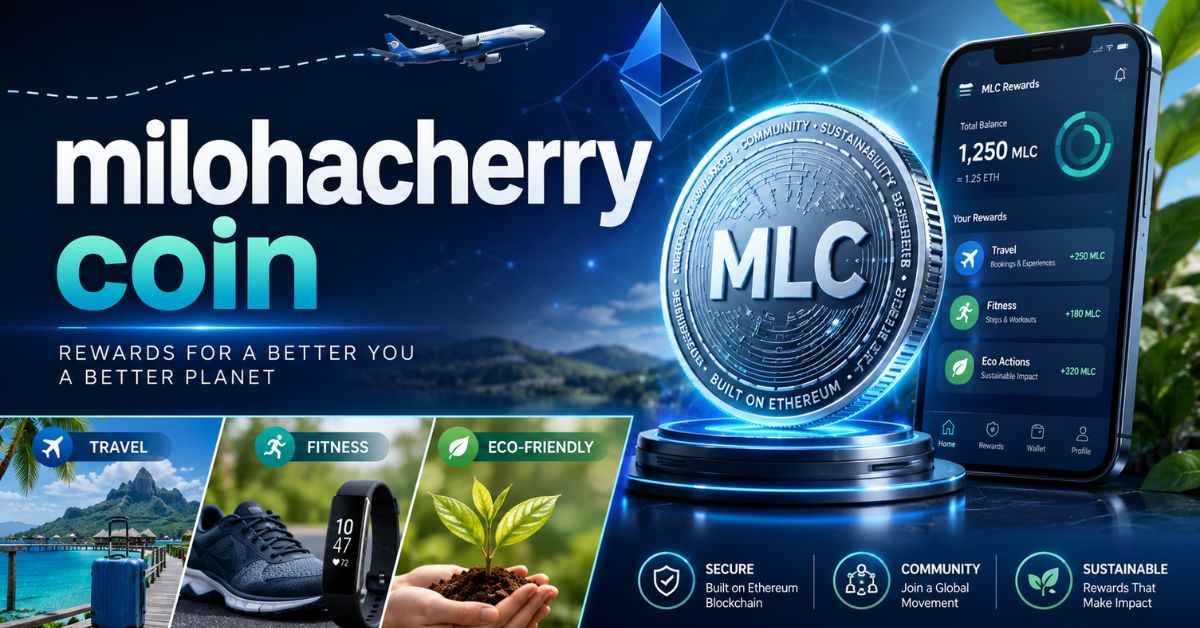
Many crypto projects promise rewards, but only a few try to connect digital tokens with real-world actions. Milohacherry coin is described as a lifestyle cryptocurrency that rewards users for activities such as travel, fitness challenges, and eco-friendly behavior.
The idea sounds simple: do useful activities, verify them through the platform, and receive MLC tokens. But before anyone treats it as an investment or reward system, they should understand how it works, what makes it different, and where the risks are.
This guide explains the concept in plain English. You will learn the token model, reward use cases, safety checks, common mistakes, and best practices for beginners.
What Is Milohacherry Coin and Why Are People Talking About It?
Milohacherry coin is a lifestyle-focused digital token commonly referred to by the ticker MLC. It is described as an Ethereum-compatible cryptocurrency designed to reward users for real-world activities.
Instead of only focusing on trading, the project connects rewards with actions such as:
- Traveling to new places
- Joining fitness challenges
- Taking part in eco-friendly tasks
- Engaging with community or partner activities
- Staking tokens through supported tools
The project’s main idea is to make crypto feel more useful in daily life. A user may earn tokens by completing a verified activity rather than only buying them from a market.
This puts MLC in a growing category of activity-based crypto projects. These projects try to combine blockchain rewards with habits people already care about, such as health, travel, and sustainability.
Still, readers should not confuse a good concept with guaranteed value. A token can have useful features and still face low demand, weak liquidity, failed partnerships, or price drops.
Basic Milohacherry Coin Overview
| Feature | Details Readers Should Know |
| Token Name | Milohacherry Coin |
| Ticker | MLC |
| Main Theme | Lifestyle rewards, travel, fitness, eco-actions |
| Blockchain Type | Ethereum-compatible |
| Consensus Model | Proof-of-stake style model |
| Reported Supply | Fixed supply of 100 million MLC |
| Reward Allocation | Around half of supply is described as user rewards |
| Main User Question | Are the rewards, partners, and token value verifiable? |
How the MLC Lifestyle Reward Model Works
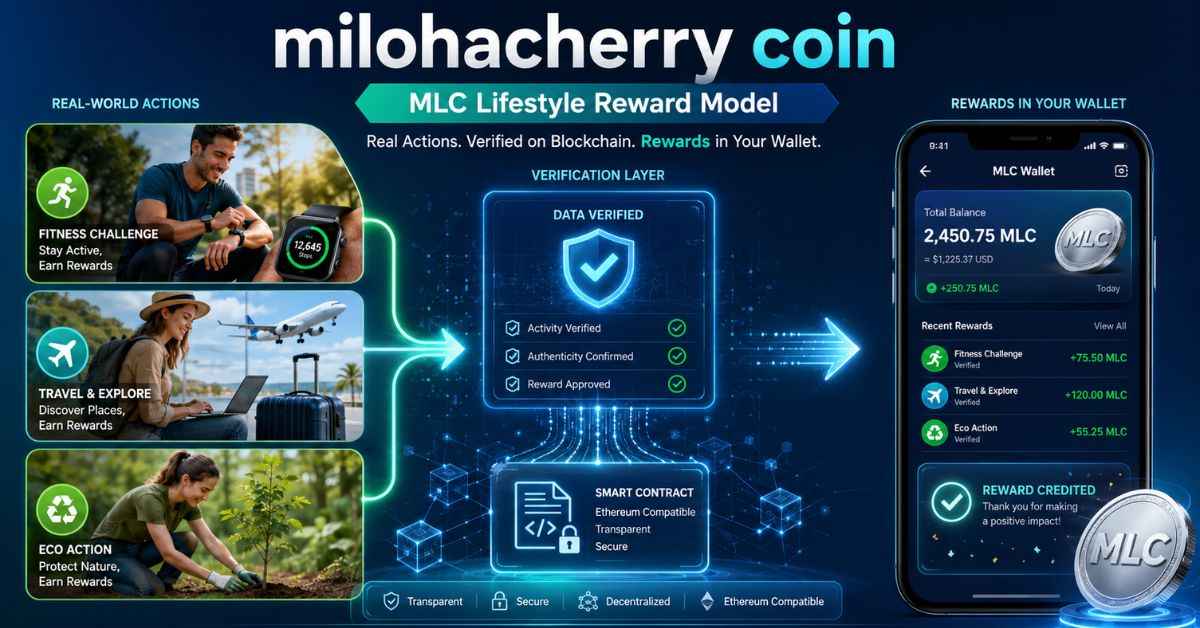
The reward model behind milohacherry coin is based on one clear promise: users should receive digital value for actions that happen outside the blockchain.
For example, a user may complete a fitness challenge, book a trip through a partner, or take part in an eco-task. The platform then needs a way to verify that action. After verification, a smart contract or reward system may release MLC tokens to the user’s wallet.
This type of system has three important parts.
First, the activity must be real. A travel booking, running challenge, or recycling task needs proof. Without proof, users could fake actions and drain the reward pool.
Second, the reward rate must be sustainable. If too many tokens are given too quickly, supply pressure may increase. If actual demand does not increase, that could lower token value.
Third, the reward must have a use. Users should know whether they can stake, hold, swap, redeem, or spend MLC in the ecosystem.
The strongest lifestyle crypto projects usually connect rewards with real partners. For MLC, readers should look for clear proof of travel brands, local businesses, verified fitness integrations, or eco-partnerships.
If those partnerships are not public or independently confirmed, treat the claim as unproven.
Milohacherry Coin Explained in a Featured Snippet Format
Milohacherry coin is an Ethereum-compatible lifestyle cryptocurrency that rewards users for real-world activities such as travel, fitness challenges, and eco-friendly actions. It uses a fixed token supply model and a proof-of-stake approach, with a large share of tokens reserved for user rewards.
Here is a simple step-by-step view:
- A user creates or connects a supported crypto wallet.
- The user joins an activity such as a trip, workout, or eco-challenge.
- The platform checks whether the activity qualifies.
- A reward is calculated based on the activity rules.
- MLC tokens are sent to the user’s wallet or reward balance.
- If the tokens are supported, the user can hold, stake, trade, or utilize them.
This process sounds easy, but the real test is verification. A reward project must prove that actions are real, rewards are fair, and the token economy can survive long term.
Tokenomics, Supply, and What Beginners Should Check
Tokenomics means how a token supply is created, divided, released, and used. For milohacherry coins, public descriptions commonly mention a fixed supply of 100 million MLC.
A capped supply can help readers understand the maximum number of tokens. But supply alone does not make a token valuable. Demand, utility, liquidity, trust, and delivery matter just as much.
A project may reserve tokens for users, community growth, staking, operations, marketing, partners, or development. If 50% goes to rewards, users should ask one simple question: how long will those rewards last?
If rewards are released too fast, many users may sell them. If rewards are too small, users may lose interest. A balanced model needs clear rules.
What to Check Before Trusting Tokenomics
| Checkpoint | Why It Matters |
| Official contract address | Prevents buying fake tokens with similar names |
| Whitepaper allocation | Shows how supply is divided |
| Vesting schedule | Reduces sudden selling by insiders |
| Reward release rules | Shows whether rewards are sustainable |
| Audit report | Helps identify smart contract risks |
| Exchange liquidity | Shows whether users can buy or sell easily |
| Partner proof | Confirms real-world utility claims |
Beginners should also check whether the project has changed its token allocation across different pages. If different sources show different splits, use the official whitepaper and smart contract as the main reference.
Real-Life Use Cases for MLC
The biggest appeal of milohacherry coin is its connection to lifestyle behavior. If the project works as described, it could support several practical use cases.
A traveler could earn small rewards for booking through a partner platform or visiting under-promoted destinations. This may encourage tourism and help local businesses gain attention.
A fitness user could join a walking, running, or cycling challenge and receive tokens after completing verified goals. This makes the reward feel more active than a normal loyalty point.
An eco-conscious user could take part in sustainability tasks, such as public transport challenges, local cleanup events, or recycling programs. The token could act as a digital thank-you for positive behavior.
A long-term supporter may stake MLC to earn extra rewards. However, staking should only be used after checking lock periods, risks, and reward terms.
The idea is attractive because it connects crypto with normal life. But it only becomes powerful if the rewards are verifiable, the app is easy to use, and partner benefits are real.
Main Risks Readers Should Understand
Every early-stage crypto token carries risk, and milohacherry coin is no exception. A useful theme does not remove normal crypto risks.
The first risk is price volatility. A token can rise or fall quickly, especially if trading volume is low. Users may earn rewards but still lose value if the market price drops.
The second risk is liquidity. If few exchanges support the token, selling may be hard. A token shown on a small platform may not have enough buyers when users want to exit.
The third risk is smart contract security. If the token or staking contract has not been audited, bugs may exist. A bug can cause lost funds, frozen rewards, or unsafe approvals.
The fourth risk is fake links. New tokens often attract scam websites, fake airdrops, and copied social media pages. Users should never connect a wallet through random links.
The fifth risk is unverified partnership claims. A project may mention travel, fitness, or eco partners, but readers should look for public proof from both sides.
A safe rule is simple: do not invest money just because a reward idea sounds exciting. Verify first, start small, and protect your wallet.
Common Mistakes
Many beginners make the same errors when exploring new lifestyle tokens. These mistakes can be expensive.
The first mistake is buying before checking the contract address. Scammers often create copycat tokens with similar names.
The second mistake is trusting reward claims without reading the rules. A platform may advertise earning opportunities, but rewards can depend on location, app access, partner availability, or account status.
The third mistake is ignoring fees. Even if a reward is free, network fees, swap fees, and withdrawal fees can reduce the final value.
The fourth mistake is treating rewards like guaranteed income. Crypto rewards can lose value, and staking returns can change.
The fifth mistake is connecting a main wallet to unknown websites. Use a separate wallet for testing new platforms. Keep long-term funds in safer storage.
The sixth mistake is following social media hype. A real project should have documentation, clear tokenomics, active development, and transparent communication.
Pro Tips and Best Practices
Use milohacherry coin research like a checklist, not like a sales page. The goal is to understand the project before risking time or money.
Start with the official source. Check the website, whitepaper, contract address, token allocation, and reward rules. If these are hard to find, that is a warning sign.
Use a fresh wallet for testing. Do not connect the wallet where you keep your long-term crypto holdings. This lowers damage if a site is unsafe.
Check whether the token appears on trusted trackers or exchanges. Limited listings do not always mean a scam, but they do increase risk.
Look for proof of audits. A smart contract audit does not guarantee safety, but it is better than no review at all.
Read community discussions carefully. Look for real product updates, not only price talk. Strong projects usually talk about users, partners, features, bugs, and fixes.
Track rewards sustainability. Ask whether the project can keep rewarding users after the first wave of tokens is distributed.
Most importantly, separate the app idea from the investment decision. You may like a project’s mission and still decide not to buy the token.
FAQs
What is milohacherry coin used for?
Milohacherry coin is used as a lifestyle reward token for activities such as travel, fitness challenges, eco-actions, and community engagement. Users may earn MLC through verified actions and may also hold, stake, or trade it where supported. Its real usefulness depends on active partners, wallet support, and liquidity.
Is milohacherry coin safe for beginners?
Milohacherry coin may be interesting for beginners, but it should be treated as high risk until key details are verified. New crypto tokens can face price swings, low liquidity, fake websites, and smart contract risks. Beginners should start with research, not investment, and avoid connecting their main wallet.
How can users earn MLC tokens?
Users may earn MLC tokens by completing approved lifestyle actions such as fitness tasks, travel-related activities, or eco-friendly challenges. The platform must verify each activity before rewards become meaningful. Always read the official reward rules because eligible actions, reward rates, and supported regions can change.
Does a fixed supply make MLC valuable?
A fixed supply does not automatically make MLC valuable. It only limits the maximum number of tokens that can exist. Real value depends on demand, trust, liquidity, reward usefulness, partner adoption, and whether users have strong reasons to keep or use the token.
What should I check before buying MLC?
Before buying MLC, check the official contract address, whitepaper, token allocation, vesting plan, audit status, exchange listings, and partner proof. Also check whether the project has active updates and clear security guidance. Never buy through links from random ads, comments, or social media messages.
Can lifestyle reward tokens lose value?
Yes, lifestyle reward tokens can lose value even if the idea is useful. If many users sell rewards, demand stays weak, or partnerships fail, the token price can fall. Rewards should be viewed as variable crypto assets, not as stable cash or guaranteed income.
Is MLC the same as normal loyalty points?
MLC is different from normal loyalty points because it is described as a crypto token that may be stored in a wallet, transferred, staked, or traded where supported. Loyalty points usually stay inside one company system. Crypto tokens offer more flexibility, but they also carry more risk.
Conclusion
Milohacherry coin is an interesting example of how crypto projects are trying to move beyond trading and connect with real-world behavior. Its lifestyle reward model may appeal to people who care about travel, fitness, sustainability, and digital ownership.
At the same time, readers should stay careful. The project’s long-term value depends on verified partners, secure smart contracts, clear tokenomics, fair rewards, and real user demand. Before using or buying milohacherry coin, check the official sources, protect your wallet, and treat all early-stage crypto claims as time-sensitive.